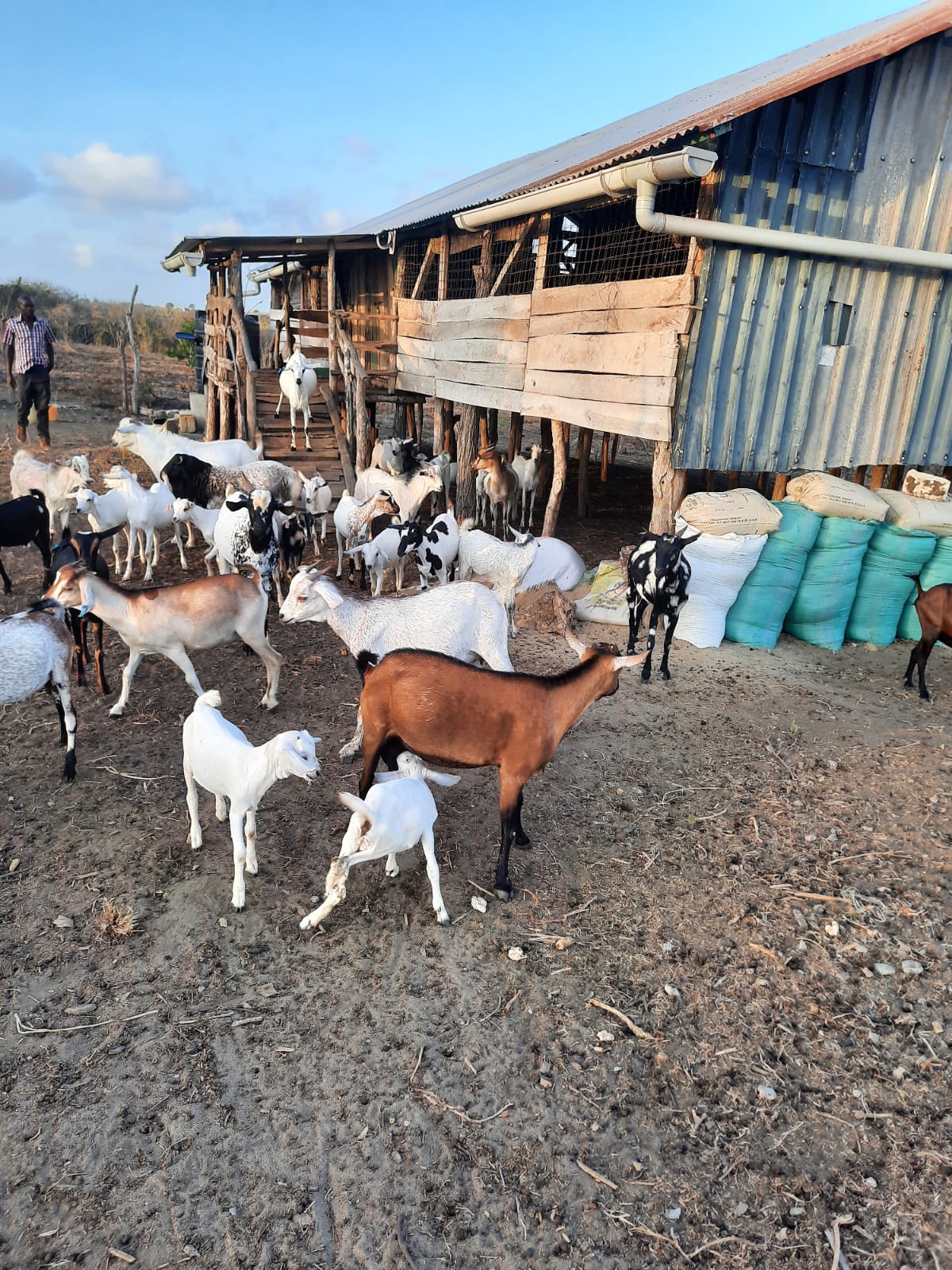
The herd today
The herd began with 5 animals in January 2025. It now stands at 42 head, grown through births and selective purchases rather than bulk stocking. Composition is managed with an eye toward the commercial roadmap: the breeds and age profile on the farm reflect where the enterprise is going, not only where it is.
Every weaned animal carries a numbered, color-coded ear tag linked to a complete digital record. That record is the operating inventory of the farm: it is how we know what we have, what it weighs, and what it is producing. Ear-tag assignment is the first act of formal admission to the herd.
Land and operating base
The enterprise runs across two farms in Magarini Sub-County, Kilifi County. The headquarters sits on 9 acres in Kaguguta Ward: this is where the herd lives, where the protocol runs, and where the farm manager and caretaker work every day. The extension is 6 acres in Gongoni Ward, roughly ~5 km away.
The extension serves as a dry-season feed reserve. Super napier and desmodium are going in to raise the dry-season yield, so the herd is fed from our own stored forage through the dry months rather than from purchased feed. Both farms together total 15 acres.
The commercial roadmap
Meat first. Then dairy, then cosmetics. Each stage is gated, not scheduled.
-
Meat
The first commercial product. Chevon is what this herd produces as it matures, and the route to market is direct: a maturing animal goes from the farm to a butcher or an off-taker. The dairy and cosmetics stages that follow each require additional infrastructure to come online first, so chevon is where the enterprise earns its first commercial revenue.
-
Pasteurized milk
Moving into dairy requires Kenya Dairy Board registration, dedicated dairy breeds, pasteurization equipment, and cold-chain logistics. All four must be in place before this phase activates. It is gated, not scheduled. No element of it is described as imminent until the prerequisites are verifiably met.
-
Cheese and butter
Value-add from milk. Cheese and butter production activates once consistent milk supply and the necessary processing capability are established. The economics of this phase depend entirely on the dairy phase being operational.
-
Lotion and soap
A goat-milk cosmetics line. This phase requires a KEBS cosmetic-manufacturing licence and dedicated processing equipment. It is the furthest horizon on the roadmap, listed here because it is the direction, not a near-term commitment.
Why operating discipline matters commercially
A buyer or off-taker agreeing to purchase from this farm needs to know that what is claimed about the herd can be verified by reading a record, not by taking our word for it. Traceability per animal, attribution per record, and a system that will not let entries be altered after the fact are not welfare features. They are the commercial infrastructure that makes a credible agreement possible. Investors, too, benefit from a herd that is legible: where growth, health, and composition are documented rather than estimated. The welfare protocol runs twice a week. Read it in full →
Asset protection sits alongside the records. The herd will be enrolled in livestock insurance once it reaches the minimum sum assured set by the insurer.
An open door
Investors, off-takers, and researchers: we welcome the conversation. The infrastructure to verify what we claim is in place; the door is open.