
They Grew
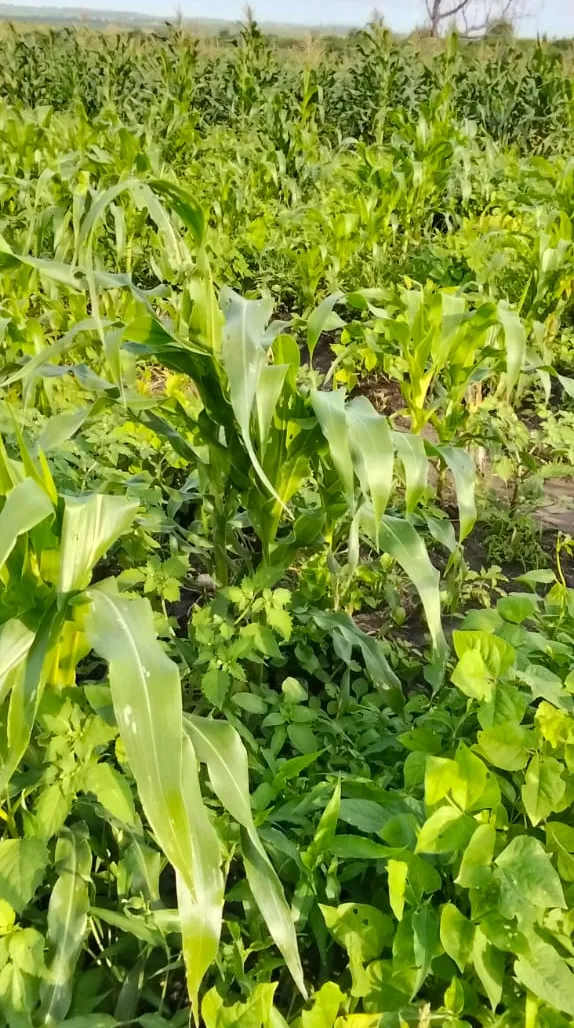
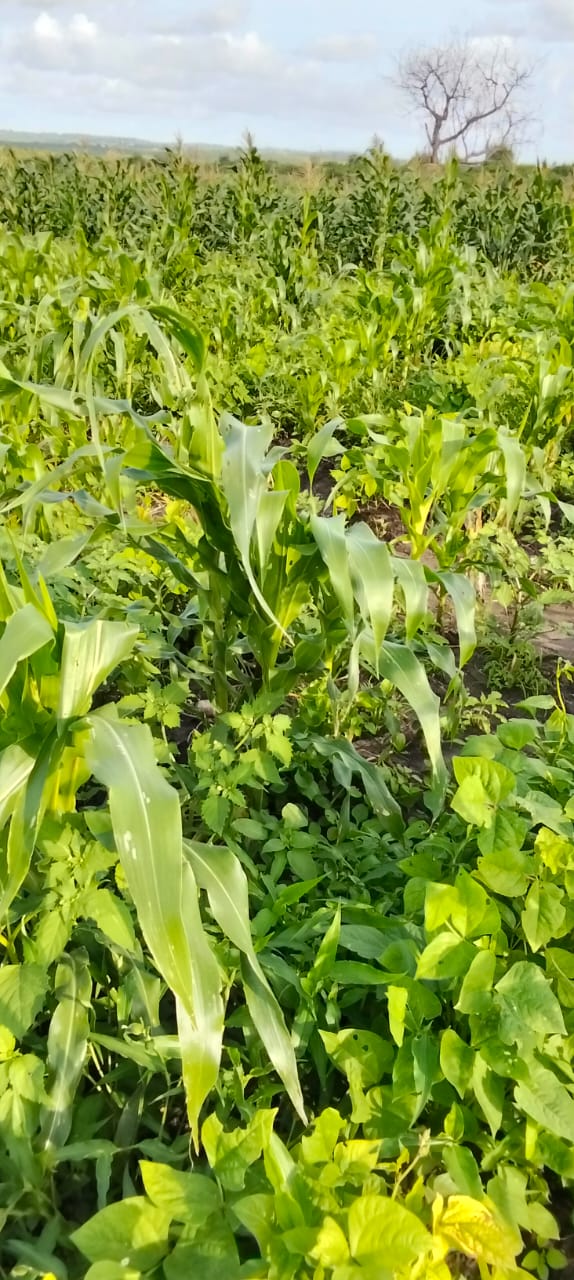
The green grams and maize are up and growing. The intercrop is visible in every row — green gram plants as the main crop with maize stalks every two metres. The field that was bare soil a few weeks ago is now green from edge to edge.
The only soil amendment was goat manure worked into the planting holes. On first-season soil, that’s a real test of whether organic methods can work from day one.
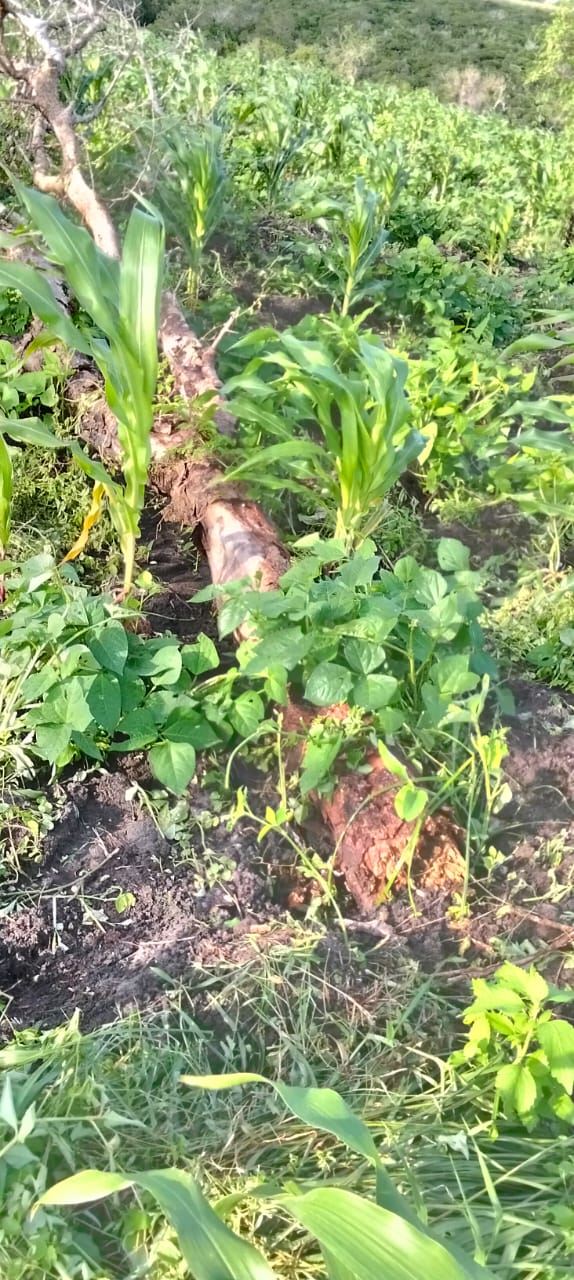
What the Intercrop Looks Like
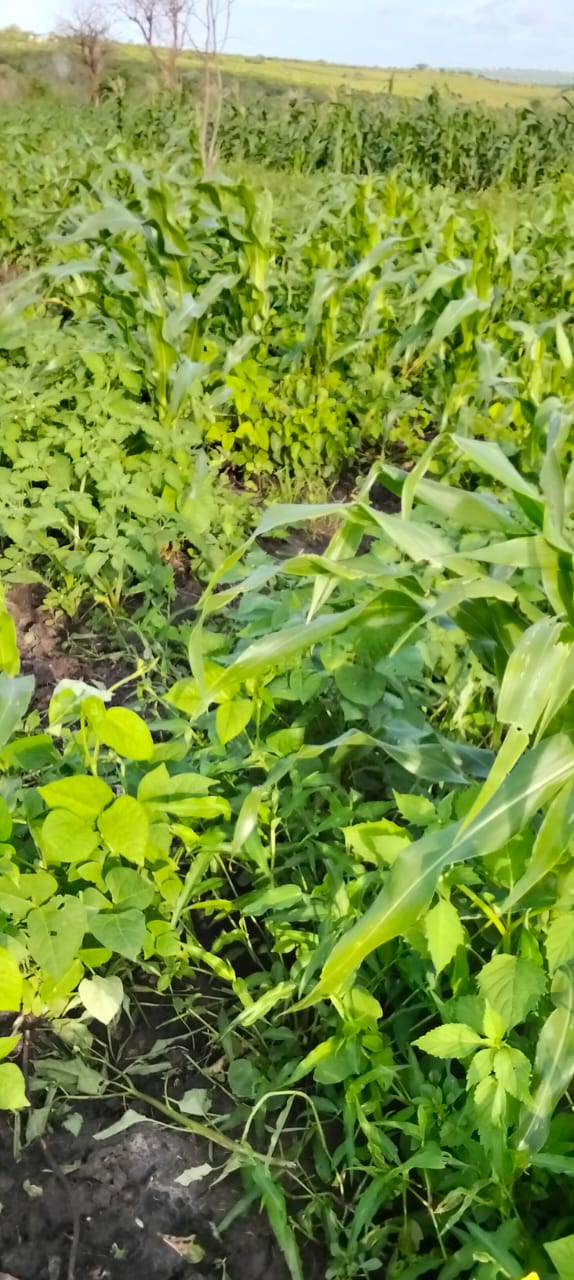
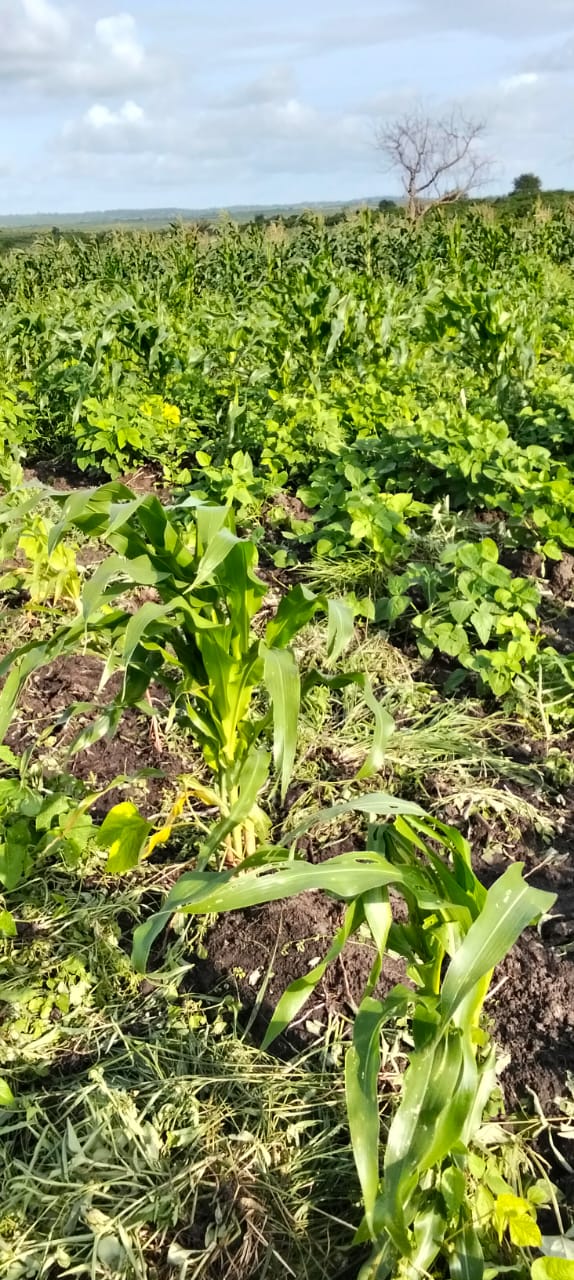
The green grams spread low and wide across the field, covering the soil surface. This ground cover matters — it reduces evaporation and suppresses weeds naturally. Between them, maize grows in defined rows every two metres, now at knee height and climbing.
The green grams are also legumes, which means they fix atmospheric nitrogen into the soil through their root nodules. So while they grow as a cash crop above ground, they’re quietly improving the soil below it.
No Data, Just Observation
We have no way to measure soil moisture, temperature, or nutrient levels. Everything we know about this growing season comes from walking the field and looking at the plants.
The maize leaves aren’t yellowing — that suggests adequate nitrogen. The green grams are flowering — that suggests they’re getting enough water. But these are observations, not measurements. A soil sensor and weather station would tell us exactly what’s happening and help us make decisions rather than guesses.
That’s the gap we want to close. Not because the crops are failing — they’re clearly growing. But because we want to understand why they’re growing and how to repeat it reliably, season after season, on soil that doesn’t forgive mistakes.
First Season, First Lessons
This is one crop cycle on first-season soil. It’s not a proof of concept for precision agriculture — it’s a proof of concept for the farm itself. Can we grow food here? The answer, so far, is yes.
What comes next is documenting the harvest, measuring what we actually produce, and starting to build the data record that every future decision will be based on.