
Why Publish This
Most farm stories skip the money. We are publishing every cost and every sale because anyone thinking about starting a farm in coastal Kenya deserves to know what it actually costs — not what a business plan says it should cost.
These are real numbers from our first year: six acres in Gongoni Ward, green grams as the main crop intercropped with maize, and a herd of goats.
Crop Costs
| Item | Cost per Acre (KES) | Total (KES) |
|---|---|---|
| Clearing | 6,000 | 36,000 |
| Tractor tilling | 4,000 | 24,000 |
| Planting — seeds | 1,200 | 7,200 |
| Planting — labour | 3,500 | 21,000 |
| Weeding | 3,500 | 21,000 |
| Spraying — organic input | 1,000 | 6,000 |
| Spraying — labour | 1,000 | 6,000 |
| Harvest — labour | 3,500 | 21,000 |
| Harvest — drying | — | 6,000 |
| Miscellaneous | — | 5,000 |
| Crop total | 153,200 |
Livestock Costs
| Item | Unit Cost (KES) | Total (KES) |
|---|---|---|
| Goats purchase — 1 male | 10,000 | 10,000 |
| Goats purchase — 5 females | 6,000 | 30,000 |
| Transportation | — | 10,000 |
| Shelter construction | — | 100,000 |
| Livestock caretaker (monthly, 15 months to date) | 4,000 | 60,000 |
| Livestock total | 210,000 |
Revenue
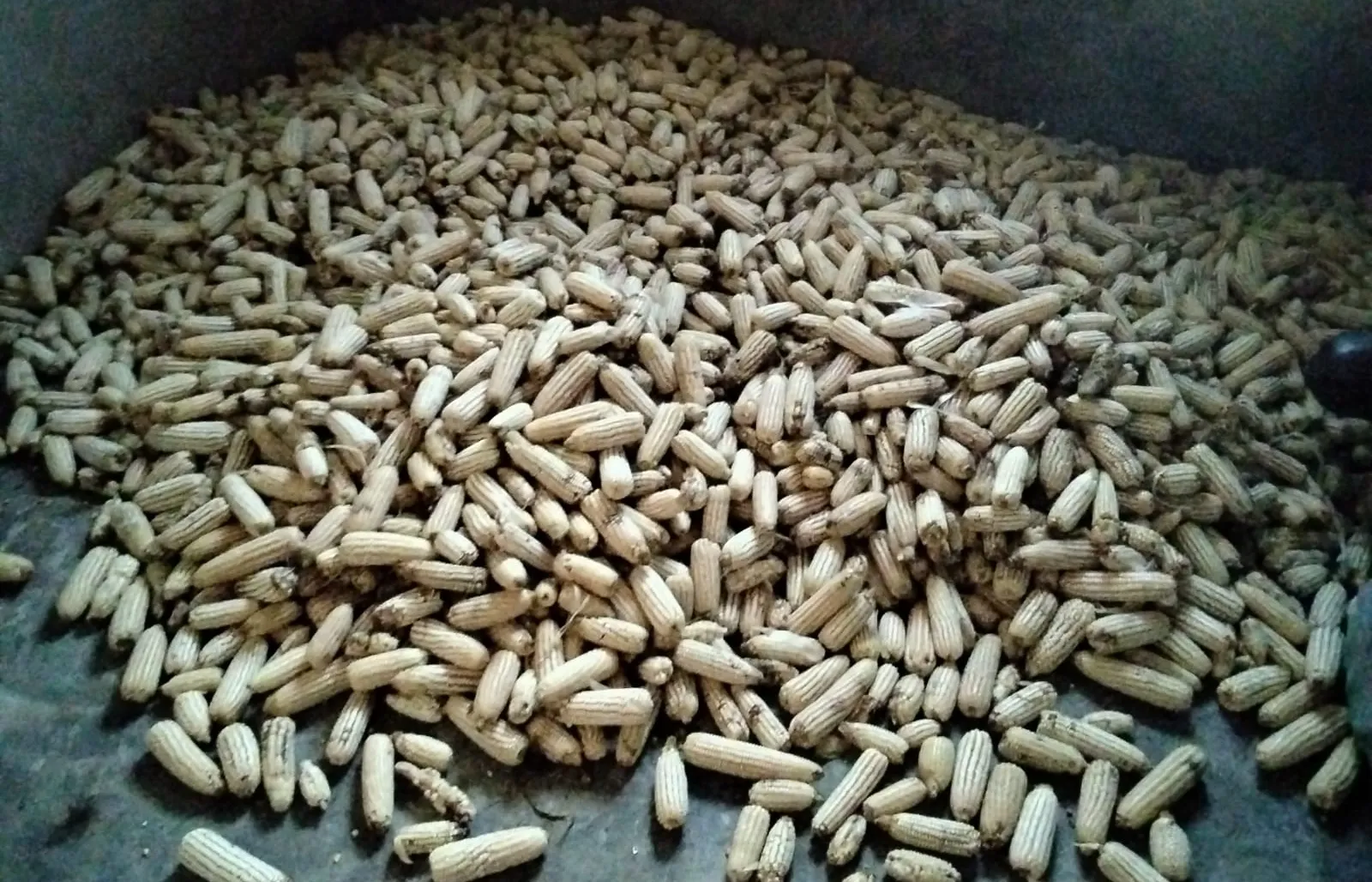
We harvested 270 kg of maize (three 90 kg bags) and sold it at KES 100 per kg.
| Item | Amount (KES) |
|---|---|
| Maize — 270 kg × KES 100/kg | 27,000 |
The green grams — our main crop — produced nothing. The entire crop was lost to prolonged rains that waterlogged the field during flowering.
Net Position
| KES | |
|---|---|
| Crop costs | 153,200 |
| Livestock costs | 210,000 |
| Total invested | 363,200 |
| Revenue | 27,000 |
| Net position | −336,200 |
What the Numbers Say
A first-year loss is not a surprise — it is the cost of starting from scratch. Several costs are one-time investments that will not recur:
- Clearing (KES 36,000) — the land is now cleared.
- Goat shelter (KES 100,000) — built once.
- Goat purchases (KES 50,000) — the herd now grows naturally through breeding.
The green gram loss is the number that matters most. That crop was on track for a harvest that would have significantly closed the gap. Losing it to weather we could not predict or measure is why we are investing in data infrastructure — weather stations and soil sensors — before the next season.
What Changes Next Season
Clearing is done. The shelter is built. The herd is self-sustaining. Next season’s cost base drops significantly before we plant a single seed. The question is whether better crop selection, timing, and — eventually — data can turn the remaining costs into a return.
We will publish those numbers too.